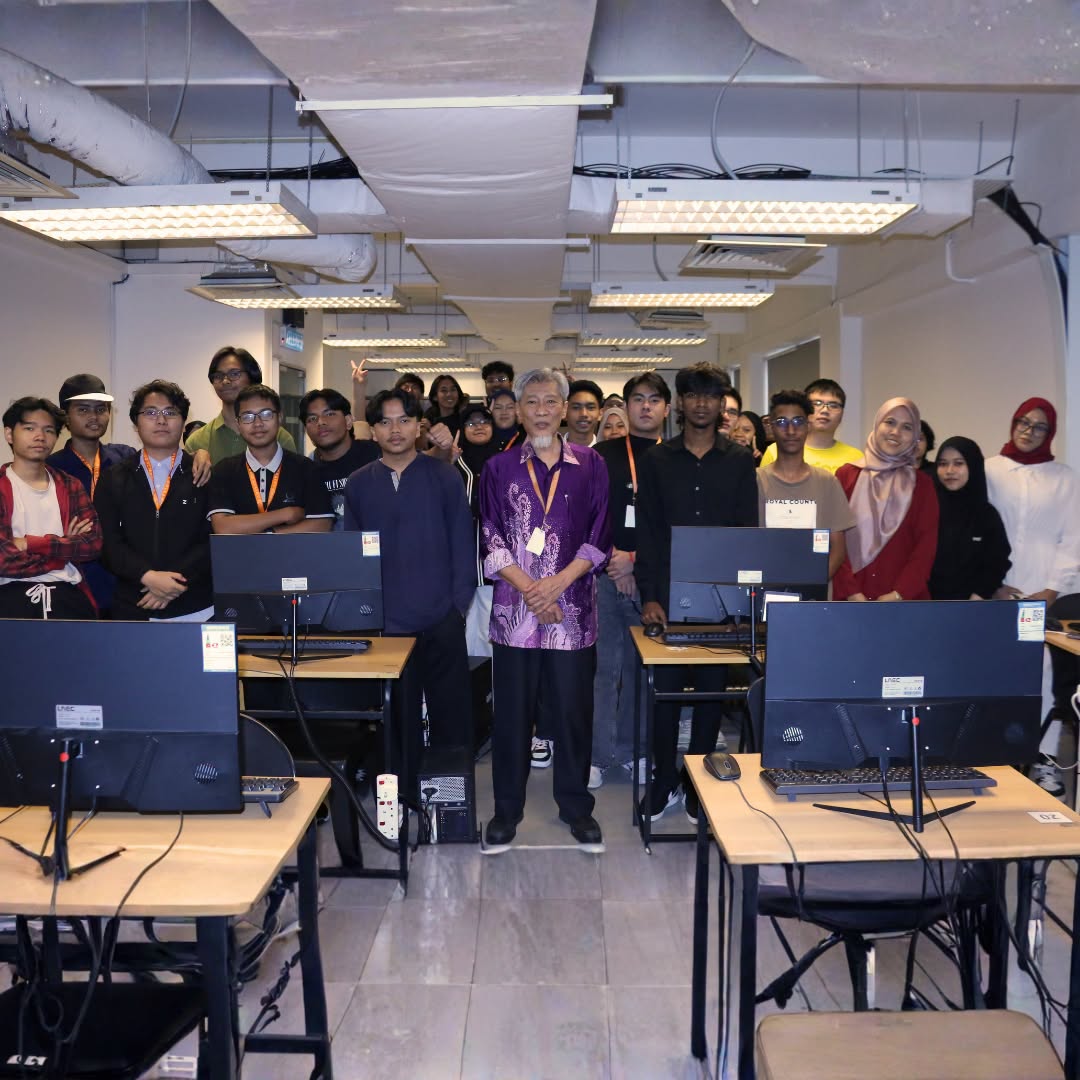
Vision University College students explored practical and responsible uses of artificial intelligence during the Smart Student’s Guide to AI: ChatGPT, Gemini, Perplexity & Beyond workshop. The learning session featured Professor Emeritus Dr. Hamzah A. Rahman and gave students an accessible introduction to using modern AI tools for academic research, problem-solving, document analysis and examination preparation.
The workshop attracted strong student participation and created an energetic space for questions, discussion and hands-on learning. Rather than treating artificial intelligence as a shortcut, the session encouraged students to understand how different tools work, evaluate their responses carefully and use technology in ways that strengthen—not replace—independent thinking.
Preparing Students for AI-Supported Learning
Artificial intelligence is becoming an important part of higher education. Students can now use AI-powered platforms to organise information, explore unfamiliar concepts and improve the way they approach complex tasks. However, productive use depends on knowing how to ask effective questions, verify information and apply academic judgement.
The Smart Student’s Guide to AI workshop helped students consider these responsibilities while introducing several widely used platforms. The session focused on how ChatGPT, Gemini and Perplexity can support different stages of the learning process when used thoughtfully.
Exploring ChatGPT, Gemini and Perplexity
Students examined ways AI tools may assist with academic work, including:
- developing clearer research questions and organising early ideas;
- summarising and comparing information from documents;
- breaking complicated problems into manageable steps;
- creating revision plans and practice questions for examinations;
- reviewing written work for clarity and structure; and
- identifying areas that require further reading or lecturer guidance.
Each AI platform has different strengths, limitations and ways of presenting information. Understanding these differences can help students choose an appropriate tool for a particular task instead of relying on a single platform for every purpose.
Using Artificial Intelligence Responsibly
A central message of the workshop was that AI-generated content should not be accepted without evaluation. Students were encouraged to check facts, examine sources and compare important claims with reliable academic materials. They were also reminded that original thinking, proper citation and compliance with assessment rules remain essential.
Responsible AI use also involves protecting personal and confidential information. Students should avoid entering sensitive data into online tools and should follow their lecturers’ instructions when AI is permitted in coursework. These habits help learners benefit from technology while maintaining academic integrity.
Supporting Research and Problem-Solving Skills
The workshop demonstrated that AI can be most valuable when it supports a clear learning goal. For research, it may help students generate useful keywords, identify possible themes and understand the structure of a topic. For problem-solving, it can offer alternative explanations or guide students through a sequence of questions.
Students still need to interpret the information, decide what is relevant and communicate conclusions in their own words. This combination of digital capability and human judgement is increasingly important for future-ready graduates.
An Engaging Session for Vision Students
The strong energy, curiosity and active participation throughout the session reflected students’ interest in understanding emerging technology. Questions and discussions helped make the workshop lively and allowed students to connect the examples with their own study habits.
Vision University College thanks Professor Emeritus Dr. Hamzah A. Rahman for sharing his expertise and all students who contributed to the success of the workshop. By learning to use AI wisely, creatively and responsibly, students can strengthen their academic confidence while preparing for a technology-driven future.